IBPS Clerk Ex-Servicemen Financial Planning Guide 2026: Salary, Savings & Investment Tips
Quick Overview
Practice free quizzes, mock tests, current affairs and exam-wise preparation resources on ExamTune.
IBPS Clerk ESM Financial Planning Guide 2026 PDF
Download the IBPS Clerk ESM Financial Planning Guide 2026 PDF to understand salary budgeting, emergency funds, savings, insurance, investments, debt management and long-term retirement planning.
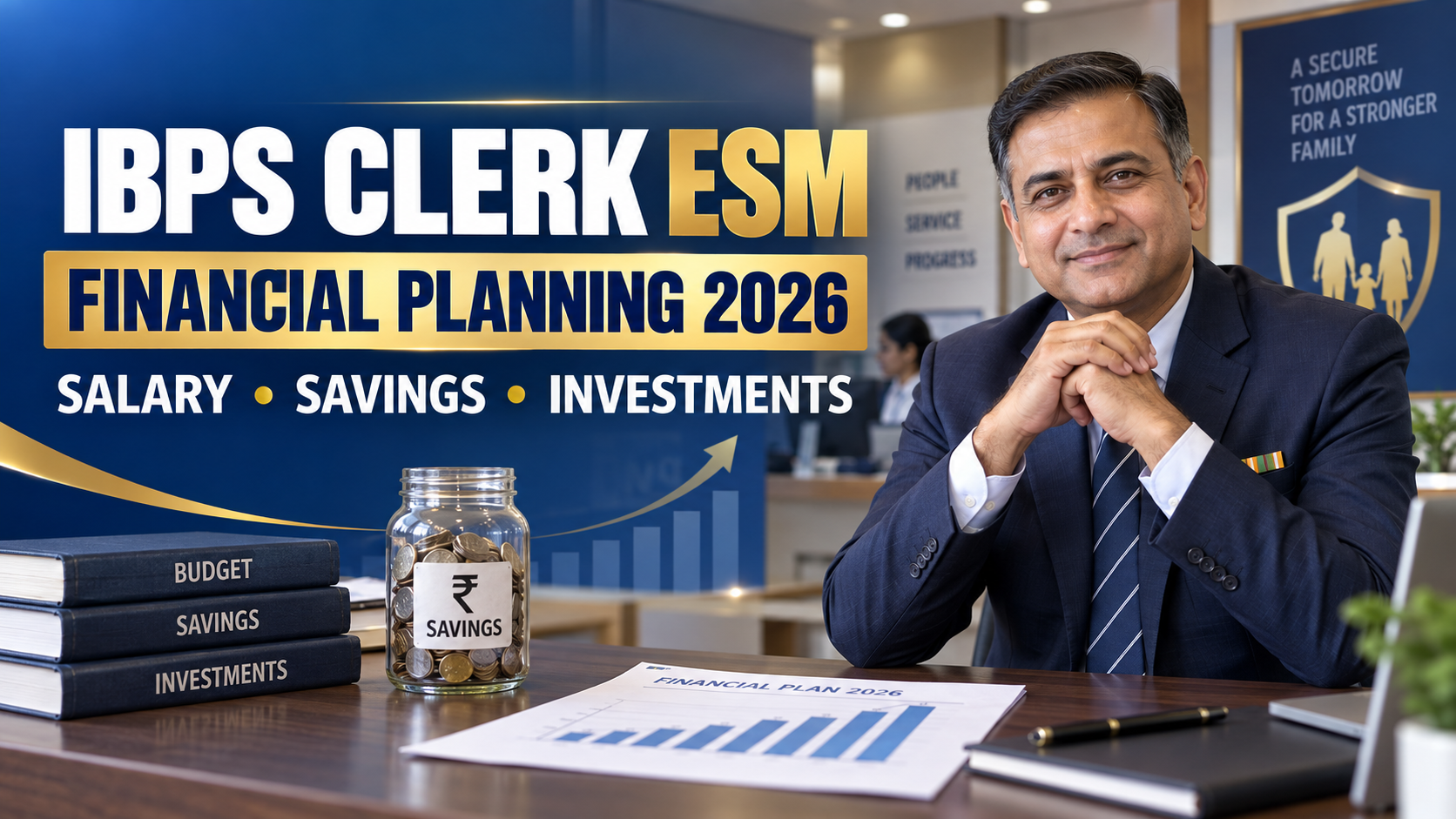
The IBPS Clerk Ex-Servicemen Financial Planning Guide 2026 helps defence personnel understand how to manage their finances after starting a banking career. After retirement from the Armed Forces, many Ex-Servicemen receive regular income from defence benefits and later begin a second career as an IBPS Clerk. Proper financial planning helps them build long-term financial security.
A Public Sector Bank job provides a stable salary, employee benefits, retirement savings, and career growth opportunities. Managing this income wisely allows Ex-Servicemen candidates to achieve personal, family, and retirement goals without financial stress.
This guide explains how Ex-Servicemen can manage their monthly salary, create savings, prepare an emergency fund, invest wisely, and plan for a financially secure future while working as an IBPS Clerk.
IBPS Clerk Ex-Servicemen Financial Planning Overview
| Particular | Details |
|---|---|
| Exam Name | IBPS Clerk 2026 |
| Post | Customer Service Associate (Clerk) |
| Category | Ex-Servicemen |
| Main Topic | Financial Planning |
| Focus Areas | Salary, Savings & Investments |
| Suitable For | Newly Joined IBPS Clerks |
Why Financial Planning is Important After Defence Service?
After retirement from defence service, many Ex-Servicemen start a second career to maintain financial stability. Proper financial planning helps balance family expenses, savings, investments, and future retirement goals.
Good financial planning helps in:
- Managing monthly expenses.
- Building emergency savings.
- Creating long-term wealth.
- Reducing financial stress.
- Planning future retirement.
Managing Salary After Joining IBPS Clerk
The first salary should be managed carefully. Instead of increasing unnecessary expenses, employees should prepare a proper monthly financial plan.
Start with money actually available: Use the salary credited after payroll deductions and add only the pension or other income actually received. Keep one-time arrears and retirement lump sums separate from regular monthly income. Avoid deducting an EMI twice if it has already been taken from payroll.
Illustration, not an expected IBPS salary or a fixed allocation: If a household receives ₹65,000 a month, ₹35,000 for essentials, ₹8,000 for EMIs paid outside payroll, ₹4,000 for annual bills and ₹10,000 for an emergency reserve leave ₹8,000 for other goals. Replace each figure with your own household numbers. SEBI’s Money Matters guide explains budgeting and goal setting.
A balanced salary plan generally includes:
- Household expenses.
- Monthly savings.
- Emergency fund contribution.
- Insurance premium.
- Future investments.
Creating a Monthly Budget
Preparing a monthly budget helps employees understand where their money is being spent. A budget also helps control unnecessary expenses and increase savings.
A monthly budget may include:
- Food and daily expenses.
- House rent or EMI.
- Children’s education.
- Medical expenses.
- Transportation costs.
- Savings and investments.
Emergency Fund Planning
An emergency fund is one of the most important parts of financial planning. It provides financial support during unexpected situations such as medical emergencies or temporary income disruption.
An emergency fund should ideally be kept separately from regular spending money.
Turn the target into a number: If essential household costs, including unavoidable EMIs, are ₹40,000 a month, a chosen six-month reserve would be ₹2,40,000. This is an illustration; select the number of months according to income reliability, dependants and medical needs. Check withdrawal access and any premature-withdrawal conditions before choosing where to keep it.
Understand deposit protection: DICGC deposit insurance covers eligible principal plus interest up to ₹5 lakh per depositor per insured bank in the same right and capacity. Eligible balances across branches and accounts of that bank are combined; opening another account there does not create another ₹5 lakh limit. Deposits in different insured banks have separate coverage. Mutual funds, shares and NBFC deposits are not covered by DICGC.
Savings vs Investment
Many people think saving and investing are the same, but both have different purposes.
| Savings | Investment |
|---|---|
| For short-term needs. | For long-term wealth creation. |
| Lower financial risk. | Returns may vary depending on the investment. |
| Easy access to money. | Usually meant for future financial goals. |
Retirement Planning During Banking Career
Although Ex-Servicemen may already receive eligible retirement benefits from defence service, planning for the future remains important. A banking career provides another opportunity to strengthen long-term financial security.
Retirement planning should include:
- Regular savings.
- Contributions and benefits under your bank’s applicable retirement scheme, such as NPS/DCPS; check the appointment terms and payroll records instead of assuming a separate Provident Fund benefit.
- Retirement investments.
- Family financial protection.
Tax Planning Basics
Understanding basic tax planning helps employees manage their income more efficiently. Proper tax planning also helps in making informed financial decisions according to applicable tax laws.
Conclusion
The IBPS Clerk Ex-Servicemen Financial Planning Guide 2026 encourages candidates to build strong financial habits from the beginning of their banking career. Proper budgeting, regular savings, emergency funds, and disciplined financial planning help create a secure and comfortable future for both the employee and their family.
Insurance & Family Financial Security
Financial planning is incomplete without adequate insurance protection. Ex-Servicemen working as IBPS Clerks should ensure that their family remains financially secure in case of unexpected situations.
Important insurance options include:
- Health insurance
- Life insurance
- Personal accident insurance
- Family protection plans
- Medical emergency coverage
Long-Term Investment Planning
Along with regular savings, long-term investments help employees build wealth and achieve future financial goals. Investment decisions should always match individual financial objectives and risk tolerance.
Before committing money, write down the goal date, withdrawal restrictions, charges and possible loss. Market-linked returns are not guaranteed. Check the intermediary’s registration and avoid offers promising unusually high assured returns. For personalised securities-market advice, consult a SEBI-registered investment adviser. Read SEBI’s investor-awareness messages before acting on an investment pitch.
Long-term financial planning focuses on:
- Retirement planning
- Children’s education planning
- Home purchase planning
- Future financial security
- Wealth creation
Financial Goals Every Ex-Serviceman Should Plan
Setting clear financial goals helps employees use their salary efficiently and avoid unnecessary spending.
Common financial goals include:
- Building an emergency fund
- Buying a house
- Supporting children’s education
- Planning retirement savings
- Creating long-term financial stability
Common Financial Mistakes to Avoid
Many employees face financial difficulties because of poor money management. Ex-Servicemen should avoid these common mistakes.
- Spending the entire monthly salary.
- Ignoring emergency savings.
- Taking unnecessary loans.
- Not maintaining a monthly budget.
- Ignoring insurance protection.
- Not planning for long-term financial goals.
Best Financial Habits for IBPS Clerk Employees
- Save a fixed portion of your monthly income.
- Track monthly expenses regularly.
- Maintain an emergency fund.
- Avoid unnecessary debt.
- Review your financial goals every year.
- Continue learning about personal finance.
Benefits of Good Financial Planning
Proper financial planning provides peace of mind and helps employees manage both present and future financial responsibilities effectively.
Major benefits include:
- Better financial stability.
- Reduced financial stress.
- Improved retirement planning.
- Better family financial security.
- Higher long-term wealth creation.
Conclusion
The IBPS Clerk Ex-Servicemen Financial Planning Guide 2026 helps defence personnel build a secure financial future after joining the banking sector. Proper budgeting, disciplined savings, emergency funds, insurance planning, and long-term investments can help Ex-Servicemen achieve financial independence while enjoying a stable banking career.
Useful Internal and External Resources
Readers can use the following ExamTune guides and official resources to understand IBPS Clerk Ex-Servicemen financial planning, salary benefits, retirement rules and recruitment information.
Related IBPS Clerk Ex-Servicemen Guides
- IBPS Clerk Ex-Servicemen Salary and Benefits 2026
– Check salary, allowances, in-hand pay and employee benefits. - IBPS Clerk Ex-Servicemen Retirement Benefits 2026
– Understand pension, provident fund, gratuity and long-term financial security. - IBPS Clerk Ex-Servicemen Documents Required 2026
– Check the required service certificates, discharge documents and applicable ESM proformas. - IBPS Clerk Ex-Servicemen Posting and Transfer Rules 2026
– Understand posting preferences, transfer conditions and workplace location planning. - IBPS Clerk Ex-Servicemen Workplace Challenges 2026
– Learn about common banking workplace challenges and practical solutions. - IBPS Clerk Ex-Servicemen Time Management Tips 202– Learn how to manage branch duties, customer requests and daily work efficiently.
Official Financial Planning and Ex-Servicemen Resources
- IBPS CRP CSA-XVI Official Page
– Check official IBPS Clerk recruitment notices and updates. - RBI Financial Education
– Access official information about budgeting, savings, responsible borrowing and financial awareness. - SEBI Investor Education
– Understand investment risks, diversification, fraud prevention and investor protection. - Department of Ex-Servicemen Welfare
– Check official pension circulars, welfare schemes and Ex-Servicemen benefits. - Ex-Servicemen Contributory Health Scheme
– Check official information about ECHS medical facilities and eligible beneficiaries.
Popular Online Live Classes


Ex-Servicemen IBPS Clerk 2026 Parakram Batch | IBPS Clerk Pre + Mains Course
Frequently Asked Questions
What is IBPS Clerk ESM Financial Planning?
IBPS Clerk ESM Financial Planning is the process of managing bank salary, eligible defence benefits, household expenses, savings, insurance, investments and future financial goals after joining as a Customer Service Associate.
Why is financial planning important for Ex-Servicemen joining a bank?
Financial planning helps Ex-Servicemen balance their second-career income, family responsibilities, existing retirement benefits and long-term goals without creating unnecessary financial pressure.
How should an IBPS Clerk manage the monthly salary?
Employees should first calculate their net income and essential expenses. A fixed amount should then be allocated to emergency savings, insurance, debt repayment and goal-based investments.
How much emergency fund should an Ex-Serviceman maintain?
A commonly used starting range is three to six months of essential household expenses. The required amount may be higher for a single-income family or a household with major medical responsibilities.
Are savings and investments the same?
No. Savings are generally maintained for short-term requirements and easy access, whereas investments are used for medium- or long-term goals and may involve different levels of risk.
Can Ex-Servicemen receive a defence pension and an IBPS Clerk salary?
Eligible candidates may receive applicable defence retirement benefits while earning a salary from their banking career. Individual pension, taxation and re-employment conditions should be verified through official records.
What insurance should an IBPS Clerk employee consider?
The employee should review health insurance, term life insurance and personal accident cover according to family responsibilities, existing employer benefits, liabilities and medical requirements.
How can Ex-Servicemen plan for retirement during their banking career?
They can estimate future expenses, continue regular retirement contributions, review provident fund or applicable bank benefits, manage healthcare costs and maintain updated nominee details.
What financial mistakes should newly joined IBPS Clerks avoid?
Common mistakes include spending the entire salary, taking unnecessary loans, ignoring emergency savings, buying unsuitable financial products and investing without understanding risk or liquidity.
How often should an IBPS Clerk review the financial plan?
The financial plan should normally be reviewed at least once every year and whenever there is a major change in income, debt, family responsibilities, health or financial goals.
About the Author

Practice free quizzes, mock tests, current affairs and exam-wise preparation resources on ExamTune.