
Quick Overview
Practice free quizzes, mock tests, current affairs and exam-wise preparation resources on ExamTune.
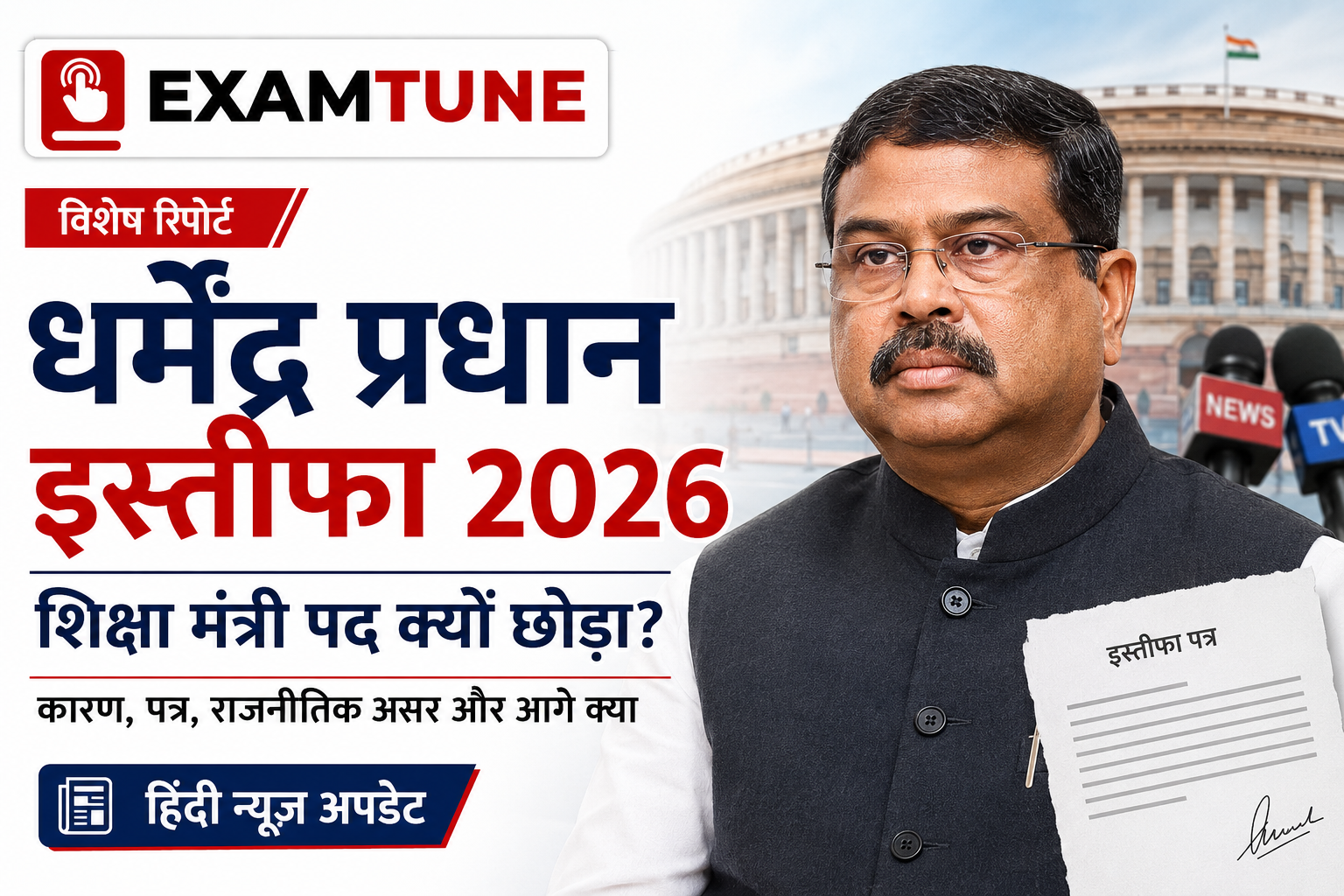
Dharmendra Pradhan announced on July 25, 2026, that he had submitted his resignation as Union Education Minister to Prime Minister Narendra Modi. The move came amid nationwide youth protests, allegations of examination irregularities and intense political pressure.
Dharmendra Pradhan Resignation is now one of India’s biggest political and education stories. For weeks, students had been asking questions about alleged exam-paper leaks, transparency and accountability. The pressure kept building until even the ministerial chair appeared to understand that “an inquiry is under way” would no longer work as a complete answer.
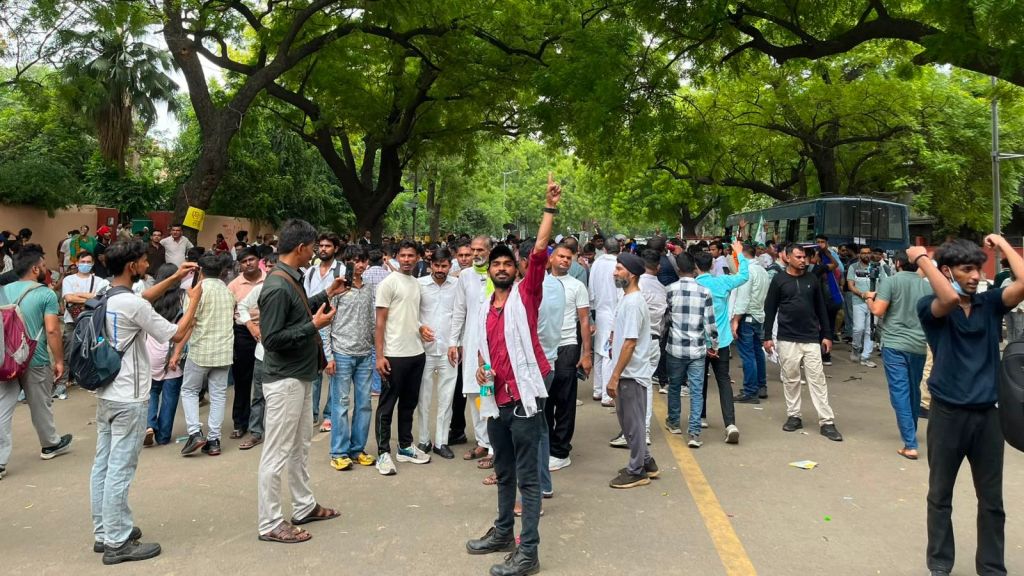
When the resignation news reached Jantar Mantar, protesters first checked their phones to confirm it. Fake screenshots travel so quickly these days that even genuine breaking news is expected to show its ID card. Once trusted reports confirmed the development, the site erupted in cheers, slogans and emotional celebrations.
The Entire Story in 30 Seconds
- Dharmendra Pradhan announced that he had submitted his resignation to the Prime Minister on July 25, 2026.
- The decision came amid a large youth-led movement over alleged exam leaks and systemic irregularities.
- In his resignation letter, he referred to students’ futures, national unity and the continuing unrest.
- Protesters at Jantar Mantar described the resignation as a major democratic victory.
- The resignation addressed one demand, but the debate over compensation, accountability and exam reform did not automatically end.
In simple terms, the first political paper is over. The final result is still pending.
The Chair Is Empty—and the Internet Has Questions
There is a popular belief that government chairs come with an industrial-strength layer of glue. So when this chair became vacant, social media reacted like someone had discovered a hidden feature: “Wait, the resign button actually works?”
MEME BREAK
Why Did Dharmendra Pradhan Resign?
The answer does not lie in one incident. Allegations of exam-paper leaks, questions about transparency, growing student anger, a sustained protest at Jantar Mantar and mounting political pressure all combined to create a serious national crisis.
At first, the establishment may have expected the demonstrations to fade after a few days. But protesters did not treat the movement like an online course that gets abandoned after two lectures. They stayed, organised, spoke to the media and kept the demand for accountability alive.
What began as anger over exam irregularities became a national political issue. The resignation eventually arrived before another round of talks between the government and protest leaders.
The government may have wanted to solve the equation using the long method. Protesters believed the correct option was already clearly marked.
What Did Dharmendra Pradhan Say in His Resignation Letter?
In his letter, Pradhan referred to students, teachers, education reform, the aspirations of young people and national unity. He argued that students should not remain trapped in prolonged political or legal conflict and said he had submitted his resignation after considering the wider situation.
The official language was formal. In ordinary student language, the message can be understood like this:
The letter was lengthy, but its political summary was short: the situation could no longer be placed in the “review later” folder.
Read the detailed resignation-letter report
Videos That Actually Show Up: Tap the Photo to Play
Some news publishers block their videos from playing inside another website’s iframe. That is why earlier video boxes may have appeared blank. The cards below use real photo thumbnails and a large play button. Tapping a card opens the verified publisher’s video in a new tab.
Watch the reaction video
Watch the full media reaction

Watch the celebration report
They do not depend on blocked video embeds. The thumbnail and play button remain visible; the verified video opens in a new tab.
What Did Abhijeet Dipke Tell the Media?
CJP founder Abhijeet Dipke described the resignation as a victory for democracy and student unity. He said the development showed that persistent public pressure could force accountability. At the same time, he indicated that other demands—including wider education reforms and justice for affected students—were still alive.
DIPKE REACTION
Watch Dipke’s emotional reaction
Sonam Wangchuk’s Reaction from Hospital
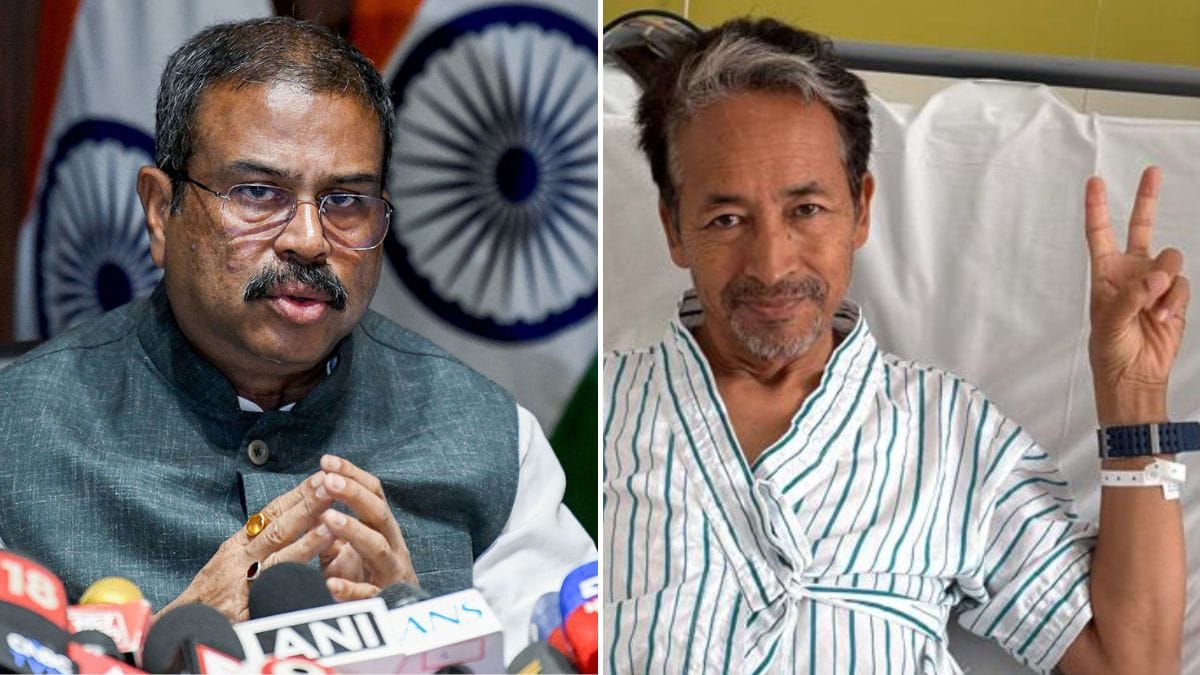
Educationist and activist Sonam Wangchuk was seen at Medanta Hospital showing a victory sign after the resignation news. He described the development as a victory for democracy, peaceful pressure and persistence. His broader message was that the movement should now shift from accountability to genuine education reforms.
A LIGHT ROAST
At Jantar Mantar: Verification First, Celebration Later
When the first reports reached the protest site, patchy internet connectivity created confusion. Protesters gathered around working phones, called friends and refreshed news feeds. Nobody wanted to begin celebrating and then discover that the story came from the University of Forwarded Screenshots.
Once multiple reports confirmed the resignation, uncertainty turned into celebration. Students embraced, parents became emotional and slogans filled the protest site. Yet many protesters said the movement was bigger than one minister and that other demands still required action.
STUDENT REACTION
Did the Government Bend Under Protest Pressure?
The resignation came during sustained public and political pressure, so protesters naturally described it as an important victory. Weeks of demonstrations, opposition criticism and growing public attention made it increasingly difficult for the government to treat the controversy as a routine administrative matter.
In political language, this was a “major development.” In ordinary language, the government realised that this question could not be skipped before opening the next page.
But the resignation alone does not resolve every allegation or repair trust in the examination system. Students still want to know how leaks occurred, who was responsible and what safeguards will prevent another crisis.
Complete Victory—or Just the First Wicket?
The resignation satisfied one major demand, but the movement also raised questions about compensation, investigation, police action, examination security and institutional accountability. That is why many participants treated the moment as an important breakthrough rather than the end of the entire struggle.
In cricket language: a big wicket has fallen, but the scoreboard does not yet say “all out.”

Does the Resignation Mean All Exams Are Cancelled?
No. A minister’s resignation does not automatically cancel examinations, change result dates or send the syllabus on holiday.
Any cancellation, re-examination, result revision or recruitment change becomes valid only after an official notice from the relevant examination agency or government department. So when a Telegram message says, “Breaking: all exams cancelled from tomorrow,” do not close your books before checking the official website.
Trust only official notifications for exam dates, results, re-examinations and recruitment changes.
What Happens Next?
1. Formal Acceptance Process
After a Union minister submits a resignation to the Prime Minister, the formal constitutional and administrative process follows. The effective date and official acceptance become clear through a government announcement.
2. A New Education Minister or Additional Charge
The government may give temporary additional charge to an existing minister or appoint a new Education Minister. Speculation will move quickly, because in Indian politics the list of possible replacements often reaches the newsroom before the chair has cooled down.
3. Pressure for Examination Reform
The next leadership will face a difficult task: restoring confidence in the examination system. Changing the person will not be enough unless processes, security, transparency and accountability also improve.
4. The Movement’s Next Strategy
Protest leaders will evaluate the government’s response to the remaining demands. Whether demonstrations end completely or move into another phase will depend on negotiations and official action.

What This Story Really Means for Students
Politically, the resignation is a major event. It demonstrates that peaceful, organised and sustained public pressure can force those in power to answer difficult questions.
But students will experience real victory only when:
- question papers remain secure;
- exams and results are delivered on time;
- responsibility is fixed quickly after a failure;
- investigations produce visible outcomes;
- students do not spend more time on protests, helplines and court cases than on studying.
Dharmendra Pradhan’s Political Journey
Dharmendra Pradhan has had a long political career spanning state politics, Parliament, party organisation and several Union ministries. He has represented Odisha in the Assembly, Rajya Sabha and Lok Sabha and has handled portfolios including petroleum, steel, skill development and education.
| Period | Major Milestone |
|---|---|
| 2000 | Elected to the Odisha Legislative Assembly |
| 2004 | Elected to the Lok Sabha |
| Later years | Served in the Rajya Sabha and held major BJP organisational responsibilities |
| Union Government | Handled petroleum, skill development, steel and education portfolios |
| 2024 | Elected to the Lok Sabha from Sambalpur |
| July 25, 2026 | Announced that he had submitted his resignation as Education Minister |

Five Shareable One-Liners
SHAREABLE LINES
The Real Question: Will the Chair Change, or Will the System?
This is the most important question in the entire story. If only the face changes while the examination system continues with the same weaknesses, the problem may return under a new headline.
The next phase must focus on paper security, digital monitoring, accountability, complaint resolution, timely investigations and communication with students. Trust does not return because a press conference promises “strict action.” Students need to see the action and its results.
That is why the Dharmendra Pradhan resignation is not the final sentence of this story. It is the first question in the next examination.
Frequently Asked Questions
Did Dharmendra Pradhan resign as Education Minister?
Yes. On July 25, 2026, he announced that he had submitted his resignation to Prime Minister Narendra Modi.
Why did Dharmendra Pradhan resign?
The resignation came amid nationwide protests over alleged exam-paper leaks, wider examination irregularities and demands for political accountability. His letter referred to students’ futures and the wider national situation.
Does the resignation cancel any examination?
No. An exam can be cancelled, postponed or repeated only through an official notification issued by the relevant authority.
What did Abhijeet Dipke say?
Dipke called the resignation a victory for democracy and student unity, while indicating that the wider movement for reforms and other demands was not necessarily over.
What did Sonam Wangchuk say?
Wangchuk welcomed the development as a victory for democracy and peaceful pressure and called for the focus to move from accountability to reforms.
Will Dharmendra Pradhan remain a Member of Parliament?
A resignation from the Union Cabinet does not automatically end Lok Sabha membership. The two positions are legally separate.
Conclusion: The Chair Is Empty, but the Questions Remain
Dharmendra Pradhan Resignation is a major political development and an important moment for India’s youth movement. One central demand was met, and scenes of celebration followed at Jantar Mantar.
But the biggest questions remain: how did the alleged leaks happen, who was responsible, how will future exams be protected and how will trust be rebuilt?
This article is based on reports available on July 25, 2026. Political and administrative developments may change quickly. Update the article when the government issues a formal acceptance or announces the next Education Minister.
Dharmendra Pradhan announced on July 25, 2026, that he had submitted his resignation as Union Education Minister to Prime Minister Narendra Modi. The move came amid nationwide youth protests, allegations of examination irregularities and intense political pressure.
Dharmendra Pradhan Resignation is now one of India’s biggest political and education stories. For weeks, students had been asking questions about alleged exam-paper leaks, transparency and accountability. The pressure kept building until even the ministerial chair appeared to understand that “an inquiry is under way” would no longer work as a complete answer.
When the resignation news reached Jantar Mantar, protesters first checked their phones to confirm it. Fake screenshots travel so quickly these days that even genuine breaking news is expected to show its ID card. Once trusted reports confirmed the development, the site erupted in cheers, slogans and emotional celebrations.
The Entire Story in 30 Seconds
- Dharmendra Pradhan announced that he had submitted his resignation to the Prime Minister on July 25, 2026.
- The decision came amid a large youth-led movement over alleged exam leaks and systemic irregularities.
- In his resignation letter, he referred to students’ futures, national unity and the continuing unrest.
- Protesters at Jantar Mantar described the resignation as a major democratic victory.
- The resignation addressed one demand, but the debate over compensation, accountability and exam reform did not automatically end.
In simple terms, the first political paper is over. The final result is still pending.
The Chair Is Empty—and the Internet Has Questions
There is a popular belief that government chairs come with an industrial-strength layer of glue. So when this chair became vacant, social media reacted like someone had discovered a hidden feature: “Wait, the resign button actually works?”
MEME BREAK
Why Did Dharmendra Pradhan Resign?
The answer does not lie in one incident. Allegations of exam-paper leaks, questions about transparency, growing student anger, a sustained protest at Jantar Mantar and mounting political pressure all combined to create a serious national crisis.
At first, the establishment may have expected the demonstrations to fade after a few days. But protesters did not treat the movement like an online course that gets abandoned after two lectures. They stayed, organised, spoke to the media and kept the demand for accountability alive.
What began as anger over exam irregularities became a national political issue. The resignation eventually arrived before another round of talks between the government and protest leaders.
The government may have wanted to solve the equation using the long method. Protesters believed the correct option was already clearly marked.
What Did Dharmendra Pradhan Say in His Resignation Letter?
In his letter, Pradhan referred to students, teachers, education reform, the aspirations of young people and national unity. He argued that students should not remain trapped in prolonged political or legal conflict and said he had submitted his resignation after considering the wider situation.
The official language was formal. In ordinary student language, the message can be understood like this:
The letter was lengthy, but its political summary was short: the situation could no longer be placed in the “review later” folder.
Read the detailed resignation-letter report
Videos That Actually Show Up: Tap the Photo to Play
Some news publishers block their videos from playing inside another website’s iframe. That is why earlier video boxes may have appeared blank. The cards below use real photo thumbnails and a large play button. Tapping a card opens the verified publisher’s video in a new tab.
Watch the reaction video
Watch the full media reaction
Watch the celebration report
They do not depend on blocked video embeds. The thumbnail and play button remain visible; the verified video opens in a new tab.
What Did Abhijeet Dipke Tell the Media?
CJP founder Abhijeet Dipke described the resignation as a victory for democracy and student unity. He said the development showed that persistent public pressure could force accountability. At the same time, he indicated that other demands—including wider education reforms and justice for affected students—were still alive.
DIPKE REACTION
Watch Dipke’s emotional reaction
Sonam Wangchuk’s Reaction from Hospital
Educationist and activist Sonam Wangchuk was seen at Medanta Hospital showing a victory sign after the resignation news. He described the development as a victory for democracy, peaceful pressure and persistence. His broader message was that the movement should now shift from accountability to genuine education reforms.
A LIGHT ROAST
At Jantar Mantar: Verification First, Celebration Later
When the first reports reached the protest site, patchy internet connectivity created confusion. Protesters gathered around working phones, called friends and refreshed news feeds. Nobody wanted to begin celebrating and then discover that the story came from the University of Forwarded Screenshots.
Once multiple reports confirmed the resignation, uncertainty turned into celebration. Students embraced, parents became emotional and slogans filled the protest site. Yet many protesters said the movement was bigger than one minister and that other demands still required action.
STUDENT REACTION
Did the Government Bend Under Protest Pressure?
The resignation came during sustained public and political pressure, so protesters naturally described it as an important victory. Weeks of demonstrations, opposition criticism and growing public attention made it increasingly difficult for the government to treat the controversy as a routine administrative matter.
In political language, this was a “major development.” In ordinary language, the government realised that this question could not be skipped before opening the next page.
But the resignation alone does not resolve every allegation or repair trust in the examination system. Students still want to know how leaks occurred, who was responsible and what safeguards will prevent another crisis.
Complete Victory—or Just the First Wicket?
The resignation satisfied one major demand, but the movement also raised questions about compensation, investigation, police action, examination security and institutional accountability. That is why many participants treated the moment as an important breakthrough rather than the end of the entire struggle.
In cricket language: a big wicket has fallen, but the scoreboard does not yet say “all out.”
Does the Resignation Mean All Exams Are Cancelled?
No. A minister’s resignation does not automatically cancel examinations, change result dates or send the syllabus on holiday.
Any cancellation, re-examination, result revision or recruitment change becomes valid only after an official notice from the relevant examination agency or government department. So when a Telegram message says, “Breaking: all exams cancelled from tomorrow,” do not close your books before checking the official website.
Trust only official notifications for exam dates, results, re-examinations and recruitment changes.
What Happens Next?
1. Formal Acceptance Process
After a Union minister submits a resignation to the Prime Minister, the formal constitutional and administrative process follows. The effective date and official acceptance become clear through a government announcement.
2. A New Education Minister or Additional Charge
The government may give temporary additional charge to an existing minister or appoint a new Education Minister. Speculation will move quickly, because in Indian politics the list of possible replacements often reaches the newsroom before the chair has cooled down.
3. Pressure for Examination Reform
The next leadership will face a difficult task: restoring confidence in the examination system. Changing the person will not be enough unless processes, security, transparency and accountability also improve.
4. The Movement’s Next Strategy
Protest leaders will evaluate the government’s response to the remaining demands. Whether demonstrations end completely or move into another phase will depend on negotiations and official action.
What This Story Really Means for Students
Politically, the resignation is a major event. It demonstrates that peaceful, organised and sustained public pressure can force those in power to answer difficult questions.
But students will experience real victory only when:
- question papers remain secure;
- exams and results are delivered on time;
- responsibility is fixed quickly after a failure;
- investigations produce visible outcomes;
- students do not spend more time on protests, helplines and court cases than on studying.
Dharmendra Pradhan’s Political Journey
Dharmendra Pradhan has had a long political career spanning state politics, Parliament, party organisation and several Union ministries. He has represented Odisha in the Assembly, Rajya Sabha and Lok Sabha and has handled portfolios including petroleum, steel, skill development and education.
| Period | Major Milestone |
|---|---|
| 2000 | Elected to the Odisha Legislative Assembly |
| 2004 | Elected to the Lok Sabha |
| Later years | Served in the Rajya Sabha and held major BJP organisational responsibilities |
| Union Government | Handled petroleum, skill development, steel and education portfolios |
| 2024 | Elected to the Lok Sabha from Sambalpur |
| July 25, 2026 | Announced that he had submitted his resignation as Education Minister |
Five Shareable One-Liners
SHAREABLE LINES
The Real Question: Will the Chair Change, or Will the System?
This is the most important question in the entire story. If only the face changes while the examination system continues with the same weaknesses, the problem may return under a new headline.
The next phase must focus on paper security, digital monitoring, accountability, complaint resolution, timely investigations and communication with students. Trust does not return because a press conference promises “strict action.” Students need to see the action and its results.
That is why the Dharmendra Pradhan resignation is not the final sentence of this story. It is the first question in the next examination.
Frequently Asked Questions
Did Dharmendra Pradhan resign as Education Minister?
Yes. On July 25, 2026, he announced that he had submitted his resignation to Prime Minister Narendra Modi.
Why did Dharmendra Pradhan resign?
The resignation came amid nationwide protests over alleged exam-paper leaks, wider examination irregularities and demands for political accountability. His letter referred to students’ futures and the wider national situation.
Does the resignation cancel any examination?
No. An exam can be cancelled, postponed or repeated only through an official notification issued by the relevant authority.
What did Abhijeet Dipke say?
Dipke called the resignation a victory for democracy and student unity, while indicating that the wider movement for reforms and other demands was not necessarily over.
What did Sonam Wangchuk say?
Wangchuk welcomed the development as a victory for democracy and peaceful pressure and called for the focus to move from accountability to reforms.
Will Dharmendra Pradhan remain a Member of Parliament?
A resignation from the Union Cabinet does not automatically end Lok Sabha membership. The two positions are legally separate.
Conclusion: The Chair Is Empty, but the Questions Remain
Dharmendra Pradhan Resignation is a major political development and an important moment for India’s youth movement. One central demand was met, and scenes of celebration followed at Jantar Mantar.
But the biggest questions remain: how did the alleged leaks happen, who was responsible, how will future exams be protected and how will trust be rebuilt?
This article is based on reports available on July 25, 2026. Political and administrative developments may change quickly. Update the article when the government issues a formal acceptance or announces the next Education Minister.
Practice free quizzes, mock tests, current affairs and exam-wise preparation resources on ExamTune.